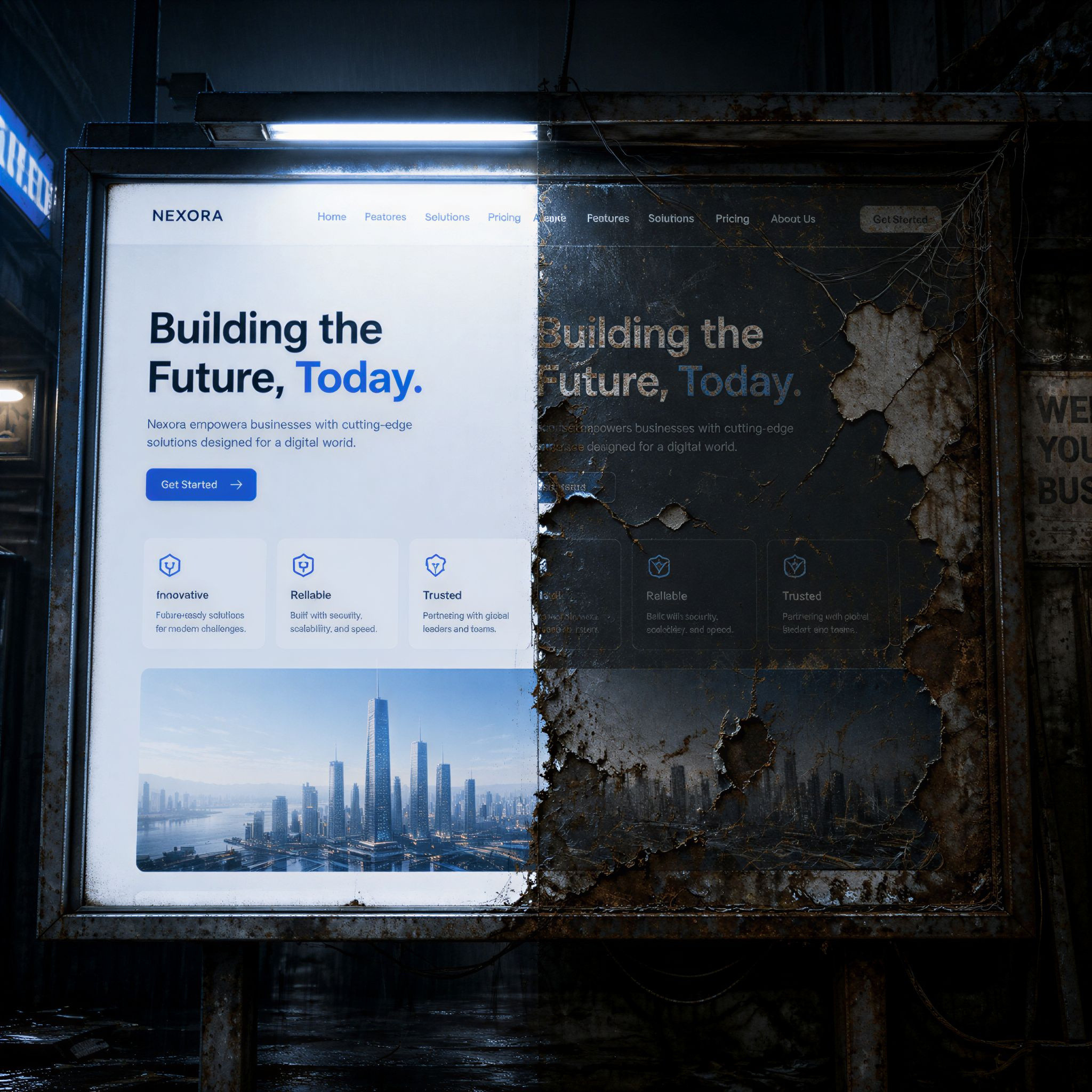
There's a strange thing about websites. Unlike a shop window or a delivery van, nothing visibly breaks when a website is neglected. No warning light comes on. No one calls to say the paint's peeling. It just quietly gets older, slower and less secure, while still looking, at a glance, the same as the day it launched. That's precisely what makes maintenance so easy to put off, and so costly when it finally catches up with you.
Why "it still works" isn't the same as "it's fine"
A website that loads and displays correctly can still be running outdated software underneath, full of unpatched security holes, or quietly losing ground in search rankings. The visible surface tells you almost nothing about what's happening behind it. Plugins go out of date, hosting environments change, browsers update their standards, and search engines refine what they reward. A site left untouched doesn't stay still while all of that moves around it. It falls behind.
What actually happens when maintenance gets skipped
The consequences tend to arrive in a fairly predictable order, and rarely all at once, which is exactly why they're easy to miss until they add up.
Security risks creep in first. Outdated CMS versions and plugins are the single most common way small business websites get hacked. Attackers use automated tools that scan the web for exactly these weaknesses, so a vulnerability doesn't need to be targeted at you specifically to be exploited. Once a site is compromised, it can be used to send spam, host malicious files, or redirect your visitors elsewhere entirely, often without you noticing straight away.
Speed and performance quietly decline. Every uncompressed image, unused plugin and unoptimised database table adds a small amount of drag. None of it feels significant on its own, but it accumulates. A site that used to load in under two seconds can drift towards five or six without a single obvious change, and visitors rarely wait around to find out why.
Search visibility slips. Search engines pay attention to signals like page speed, mobile usability and fresh content. A site that hasn't been touched in years sends the opposite signal to the one you want, and competitors who are actively maintaining their sites will steadily overtake you in the results.
Broken links and outdated content build up. Prices change, products get discontinued, staff move on, and external sites you once linked to disappear. Each of these leaves a small crack in the experience. Enough of them, and visitors start to wonder whether the business behind the site is still paying attention.
Trust erodes without a single dramatic moment. A visitor doesn't need to see a security warning to feel uneasy. An old copyright date in the footer, a broken contact form, or a design that looks stuck in a previous decade all do the same quiet damage. People form an impression of your business from your website faster than almost anywhere else, and an unmaintained site tells them a story you didn't intend to write.
Why the cost of neglect is higher than the cost of upkeep
Fixing a hacked website, rebuilding lost search rankings, or recovering a damaged reputation all take far longer and cost far more than the regular maintenance that would have prevented them. Repairing damage is reactive, expensive and stressful. Maintaining a site is routine, affordable and largely invisible, which is exactly the trade worth making.
What good maintenance actually looks like
It doesn't need to be complicated. A solid routine covers regular software and plugin updates, security monitoring, performance checks, backups that are actually tested, and a periodic look at content to make sure it's still accurate. Done consistently, this is a small amount of ongoing effort. Done rarely or not at all, it becomes a much bigger problem waiting for the wrong moment to surface.
Your website works hardest when you're not thinking about it, which is exactly why it deserves some thought. If it's been a while since anyone checked under the hood of yours, get in touch with the Klickhere team, and we'll help you keep it running the way it should.